
Lifting Columns &
Telescopic Lifting
Column Systems
Isotech's electric lifting columns are self-contained vertical motion systems combining drive, guidance, and electronics in a single compact package — no external guide rails required. From height-adjustable workbenches and office desks to medical imaging tables and collaborative robots, Isotech supplies telescopic lifting columns in push or pull configurations, with optional encoder feedback for synchronized multi-column operation.
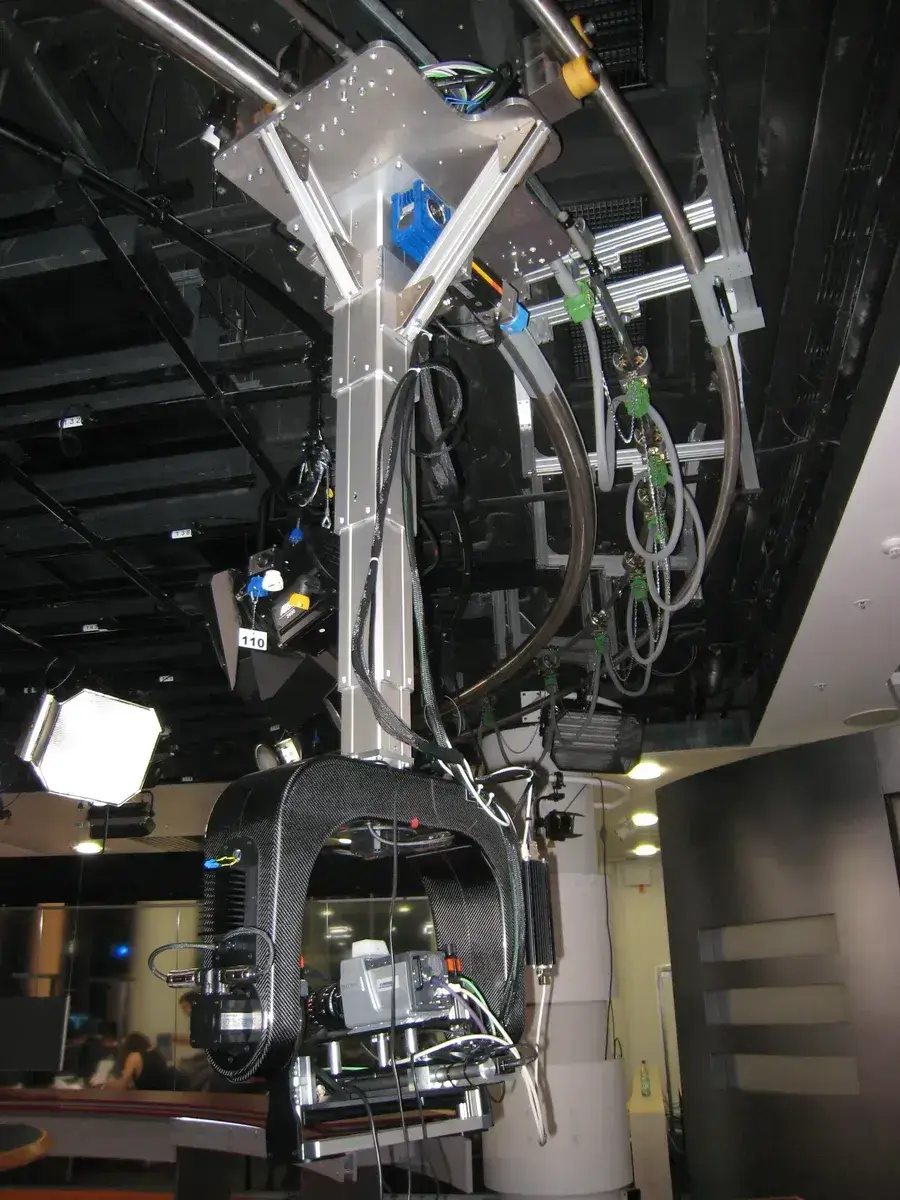
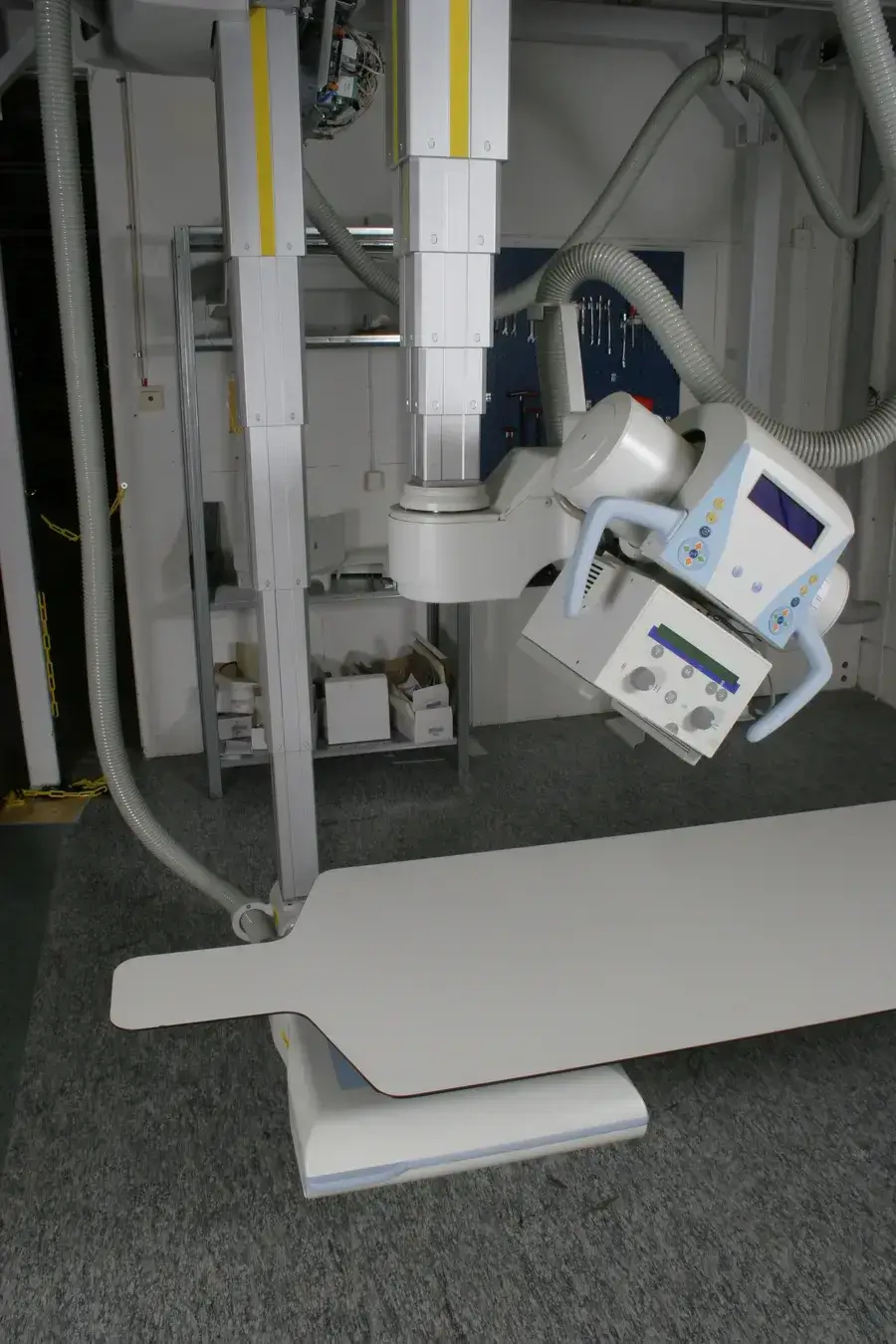
Telescopic Lifting Column Series
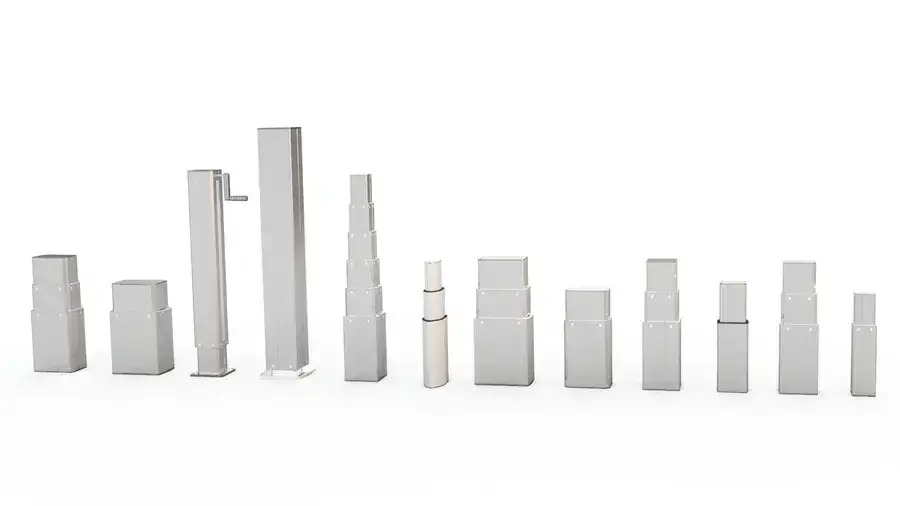
From compact two-section lifting columns for ergonomic fixtures to heavy-duty six-section systems for medical and industrial platforms. Select a series below to view load ratings, stroke lengths, speed, and mounting options.
A-Series Telescopic Lifting Columns
The most versatile lifting column in the range. Up to six sections for an exceptional stroke-to-retracted-height ratio. Suited for medical imaging tables, industrial lifts, and custom positioning systems.
- Load: up to 12,000 N
- Speed: up to 250 mm/s
- Max offset load: up to 3,000 Nm
- Up to 3,000 mm, Longer strokes on request
B-Series Telescopic Lifting Columns
Heavy-duty two and three-section lifting columns for demanding industrial and medical applications requiring high load capacity in a compact retracted footprint.
- Load: up to 12,000 N
- Speed: up to 250 mm/s
- Max offset load: up to 2,500 Nm
- Up to 3,000 mm, Longer strokes on request
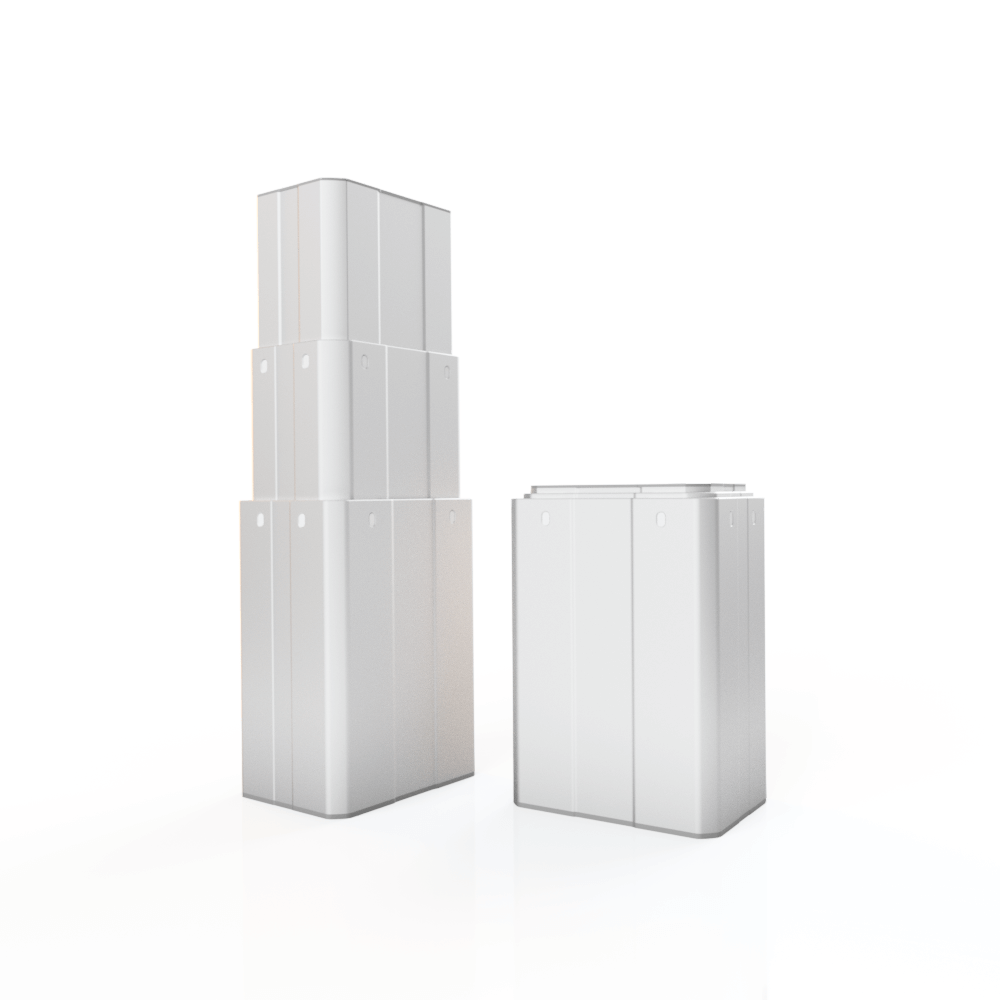
E-Series Telescopic Lifting Columns
Compact two-section lifting column for lighter loads. Ideal for height-adjustable workstations, ergonomic fixtures, and space-constrained installations.
- Load: up to 2,500 N
- Speed: up to 26 mm/s
- Max offset load: up to 750 Nm
- Up to 700mm, Longer strokes on request
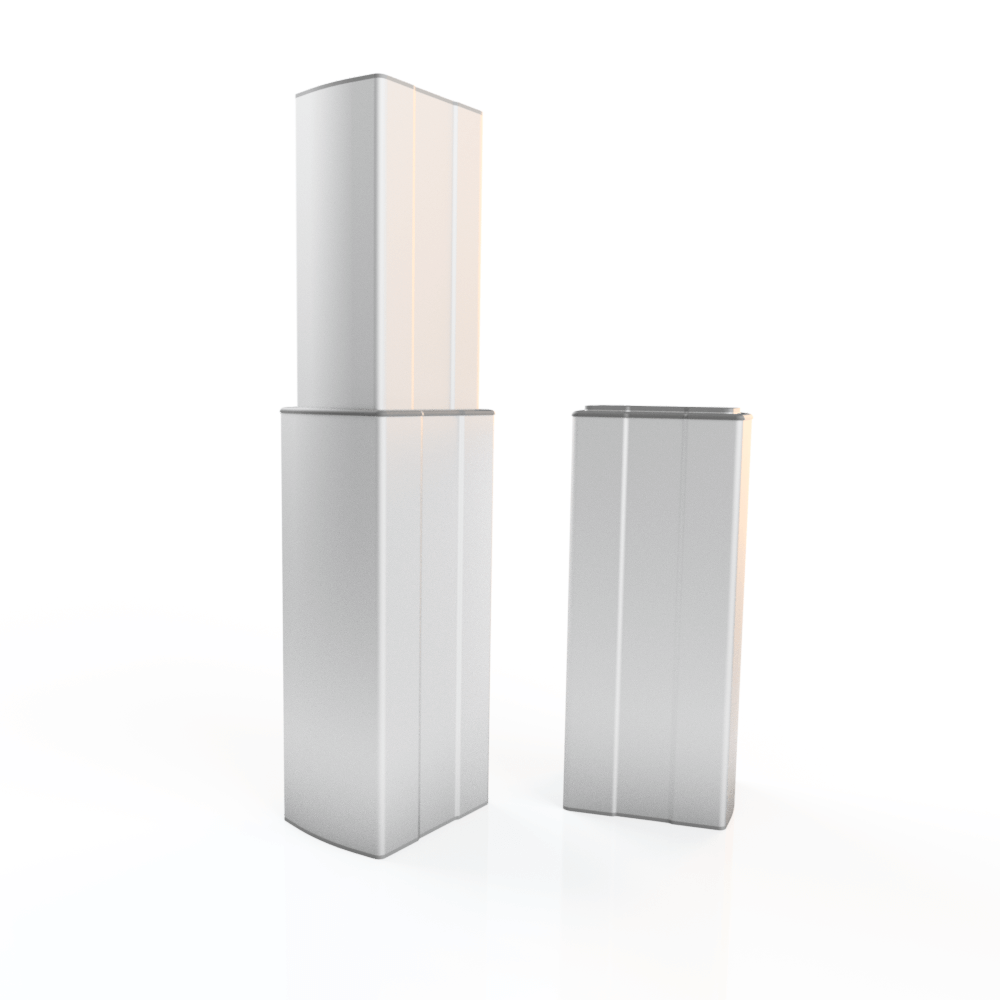
F-Series Electric Lifting Columns
A popular choice for encoder-ready lifting column applications. Push or pull configuration, 2 and 3-section, suited for synchronized parallel operation on sit-stand desks and adjustable platforms.
- Load: up to 2,500 N
- Speed: up to 35 mm/s
- Max offset load: up to 800 Nm
- Up to 800mm, Longer strokes on request
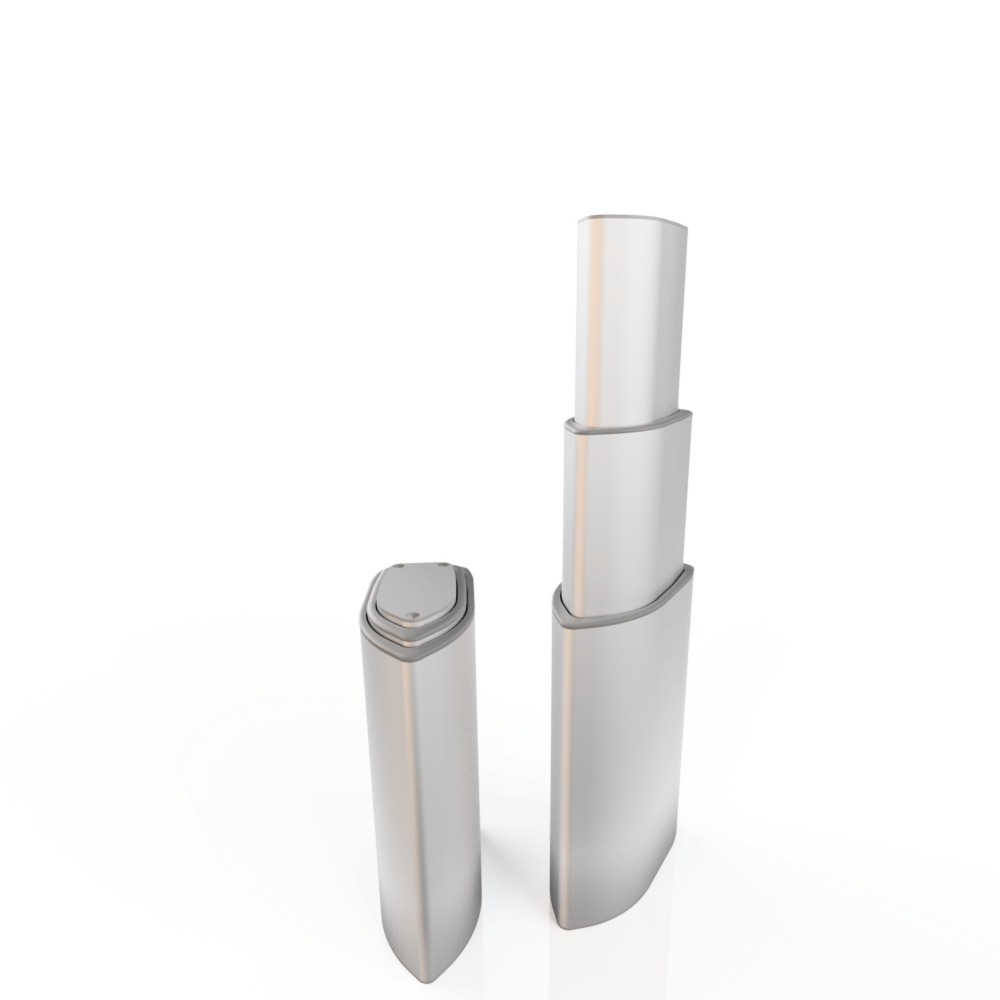
G-Series Telescopic Lifting Columns
Mid-range two and three-section lifting columns balancing load capacity and stroke for medical equipment, adjustable platforms, and light industrial positioning.
- Load: up to 3,000 N
- Speed: up to 31 mm/s
- Max offset load: up to 1,100 Nm
- Up to 1,000 mm, Longer strokes on request
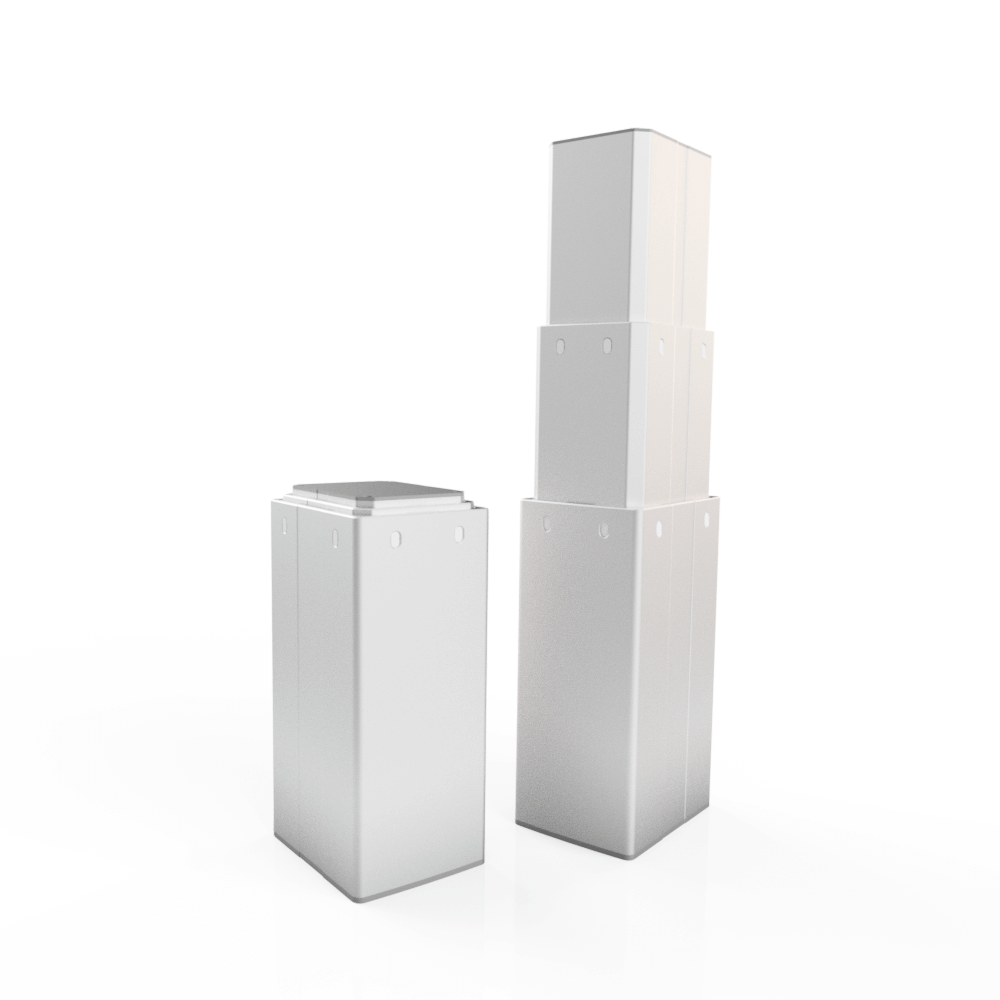
X-Series Heavy-Duty Lifting Columns
The highest moment-load lifting column in the range at 6,000 Nm. Built for demanding industrial applications where high off-axis loads, long strokes, and reliability under continuous use are all required.
- Load: up to 12,000 N
- Speed: up to 250 mm/s
- Max offset load: up to 6,000 Nm
- Up to 3,000 mm, Longer strokes on request
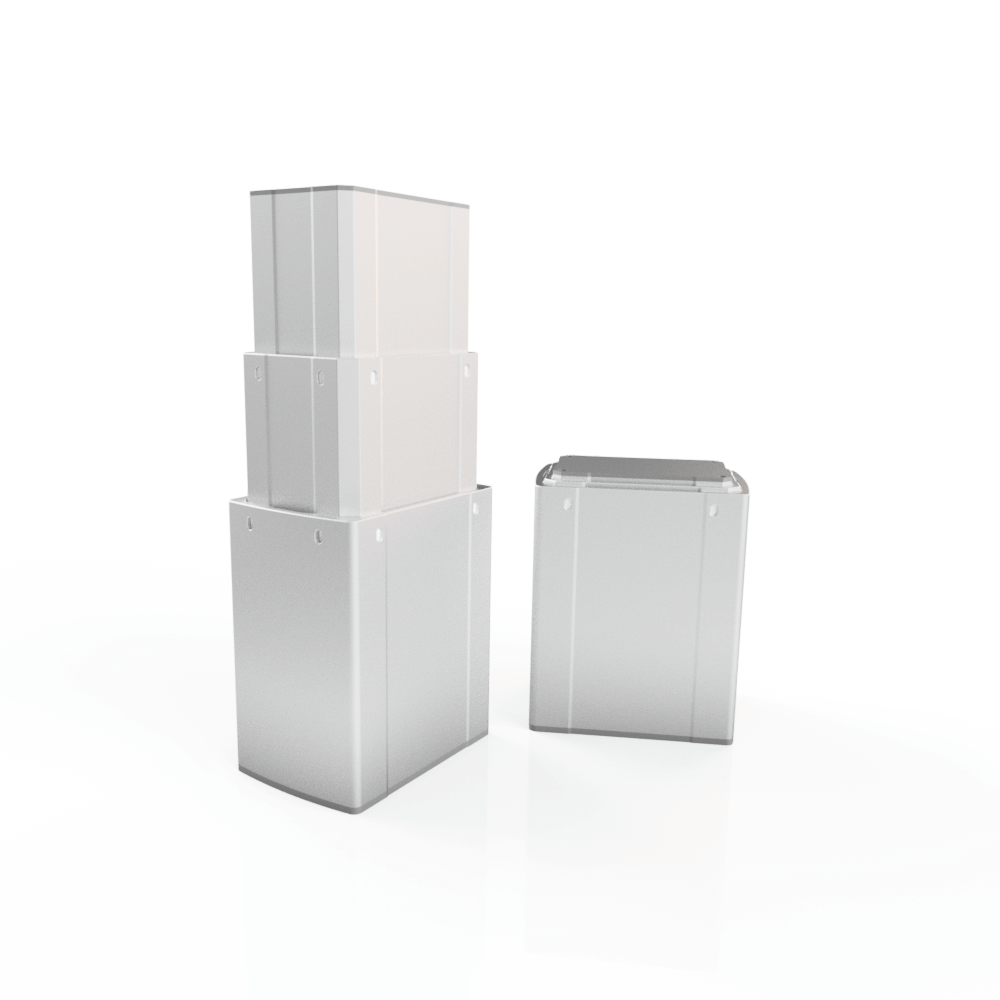
Engineered for Offset Loads
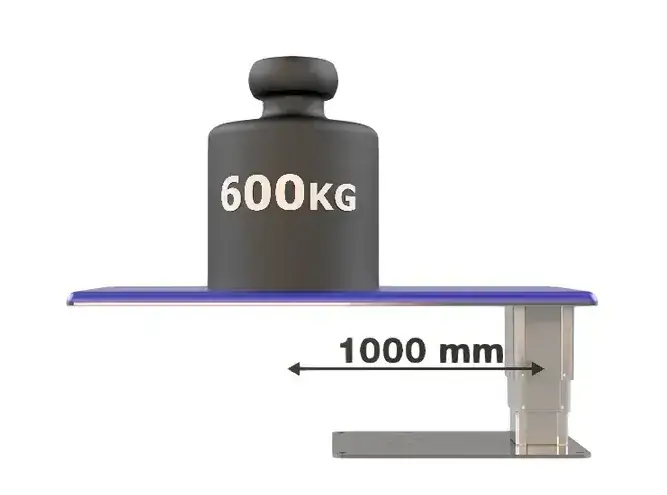
An offset load is any load whose center of gravity sits away from the lifting column’s central axis. Because the load is cantilevered out from the column, it generates a bending moment — measured in Newton-meters (Nm) — in addition to the vertical weight the column has to lift. Sizing a column means checking both ratings.
Every Isotech telescopic lifting column is rated for offset load capacity, and the X-Series leads the lineup at 6,000 Nm — the equivalent of supporting a 600 kg payload a full meter from the column’s centerline. That makes it the right choice for cantilevered medical platforms, wide work surfaces, and any application where the load can’t be centered directly above the column.

What Makes a Telescopic Lifting Column Different?
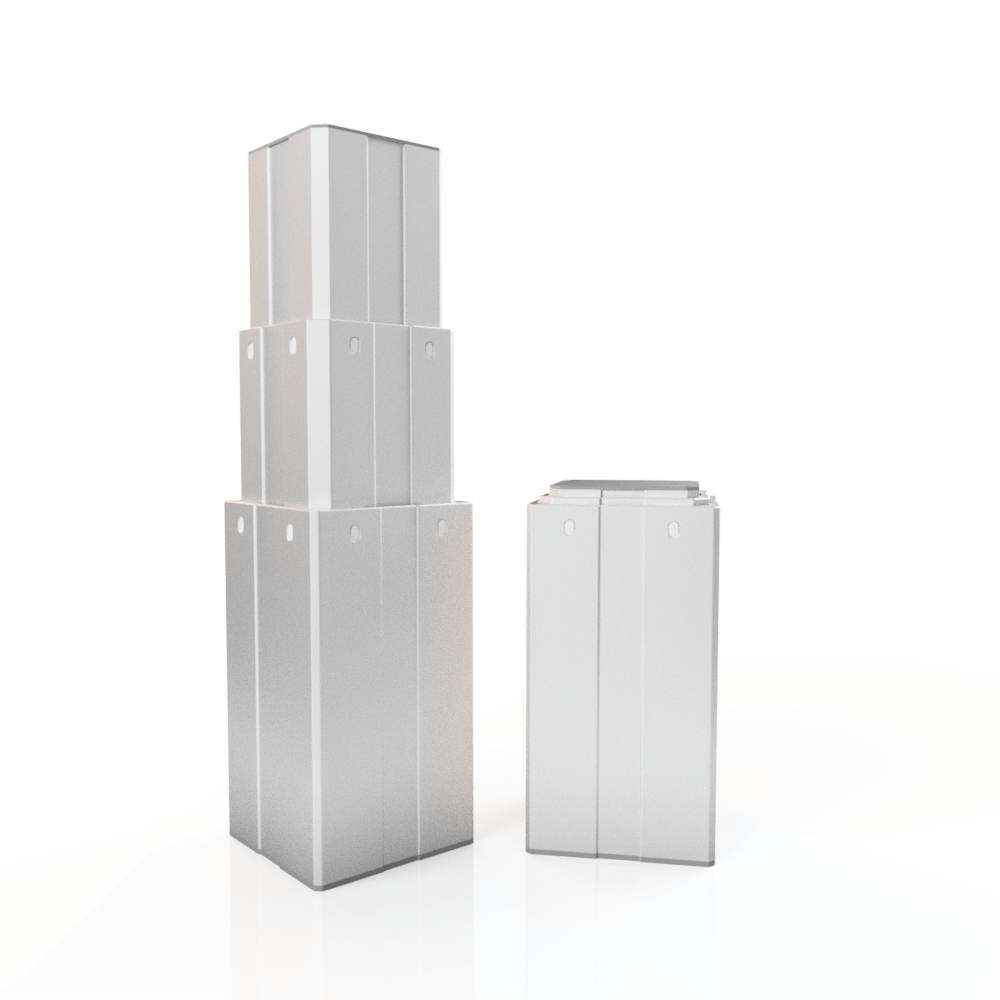
A telescopic lifting column is a self-contained vertical motion system built from precision-nested aluminum tubes. Unlike a standard linear drive, the telescoping design delivers a very high stroke-to-retracted-length ratio — meaning the column can travel far while remaining compact when closed.
Where others use loose-fitting tubes that introduce play and instability, Isotech’s design uses a tight-tolerance assembly with long-life guiding pads. The result is a stable, play-free lifting column that operates reliably without maintenance — even under significant offset loads.
Isotech’s electric lifting columns are available as push or pull versions to suit different mounting orientations, with optional encoder feedback for position monitoring or synchronized parallel column runs.
Tight-tolerance assembly Differentiator
Precision-fit nested tubes with long-life guiding pads eliminate play. Where others squeeze the tubes to control movement — we fit them. The result is a guiding system with no wobble or side-load drift.
Push or pull configuration
Available in push (column extends under motor force) or pull (column retracts under motor force) versions to match your mounting orientation and load requirements without redesigning the installation.
Encoder option Parallel sync
Optional integrated encoder provides position feedback for precise positioning control or synchronized parallel operation of two or more lifting columns — essential for level platforms and medical tables.
Custom stroke & load
All columns are custom made to order. Standard configurations cover strokes to 3,000 mm and loads to 12,000 N — but there are no hard stroke limits. Custom stroke lengths, load capacities, speeds, number of sections, and mounting interfaces are available on request. Contact Isotech to discuss your requirements.
Lifting Column Applications
Isotech's lifting columns serve any application that requires controlled, motorized vertical travel in a compact, self-contained package — across medical, industrial, ergonomic, and specialty markets.
Medical & Radiological Equipment
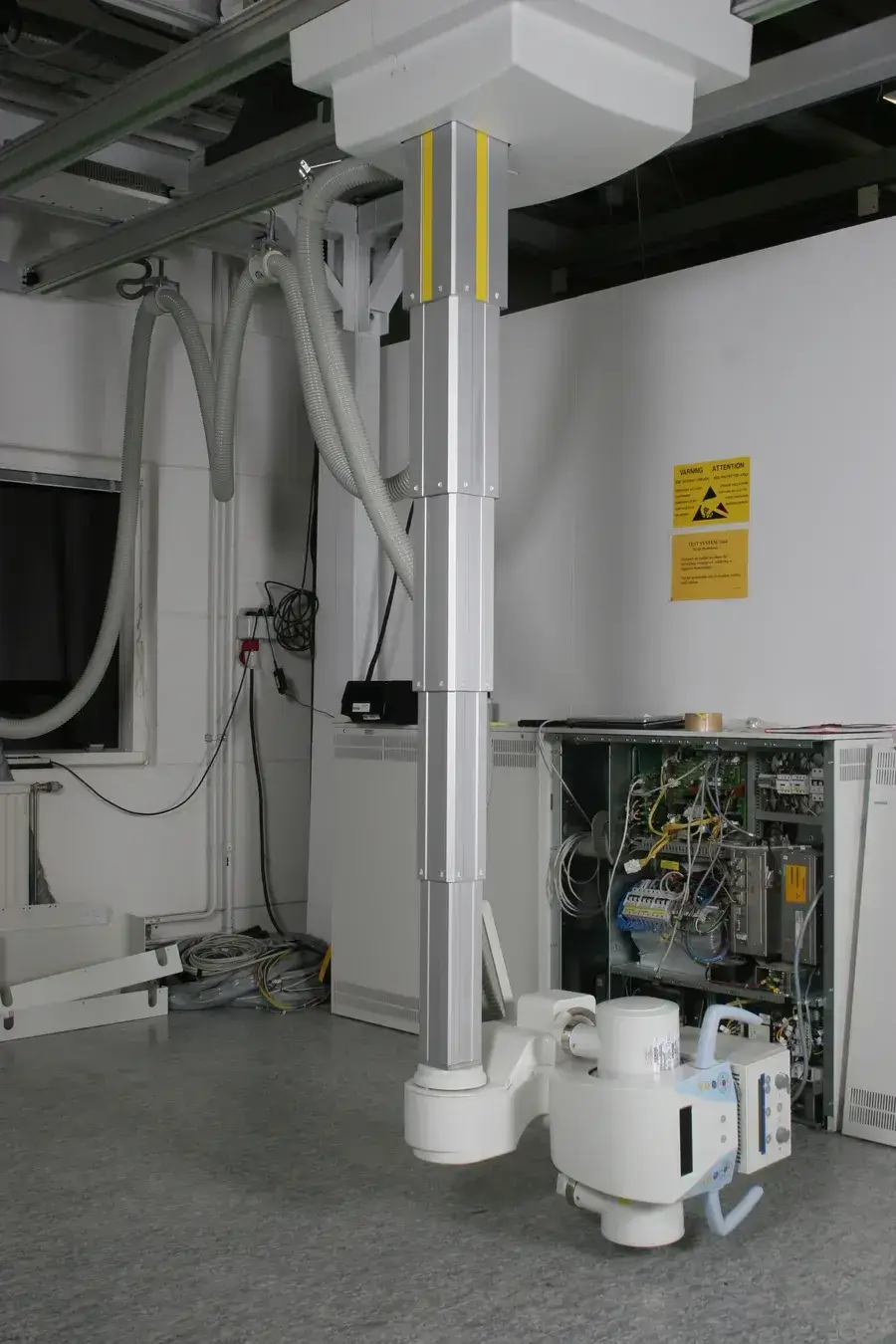
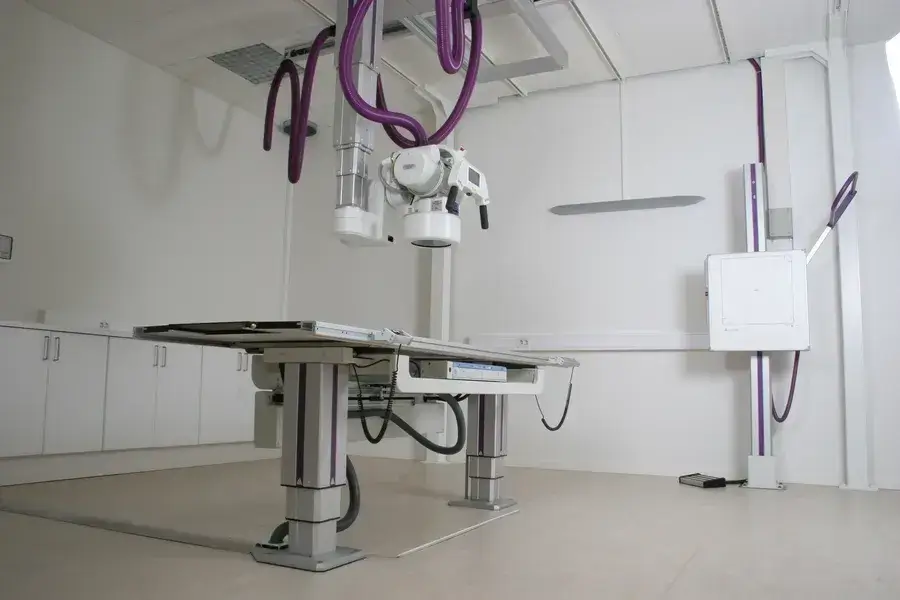
X-ray tables, CT scanners, MRI patient platforms, operating tables, and examination chairs require smooth, quiet, play-free vertical travel — often synchronized across multiple columns to keep the platform level.
Ergonomic Workstations & Office Desks
Height-adjustable desks, sit-stand platforms, and operator workstations use electric lifting columns to provide smooth, motorized height adjustment with load capacities suited for monitors, equipment, and full work surfaces.
Specialty Seating & Patient Handling
A standout feature of Isotech's telescopic lifting columns is the ability to handle large offset loads — up to 6,000 Nm on the X-Series. The column can support heavy loads mounted far from its centerline, making it ideal for cantilevered medical platforms, one-sided industrial fixtures, and imaging tables where the load is not centered directly above the column.
Industrial & Automation Equipment
Industrial workbenches, labeling stands, collaborative robots, camera stands, and assembly fixtures use telescopic lifting columns where a long stroke and stable guidance are needed in a minimal footprint.
Where Are Lifting Columns Used?
Lifting columns are the preferred vertical motion solution when height adjustment, load-bearing stability, and a clean aesthetic all matter. Below is a full reference of typical lifting column applications by market.
Medical & Clinical
- Hospital beds & patient lifts
- Operating & examination tables
- Dental & medical treatment chairs
- MRI machines & CT scanners
- X-ray machines & radiological tables
- Imaging system positioning arms
- Wheelchair lifts & accessibility equipment
Industrial & Automation
- Industrial workbenches
- Labeling stands
- Collaborative robots (cobots)
- Assembly & inspection fixtures
- Packaging & production equipment
- Machine tool positioning
Office, Ergonomic & Specialty
- Height-adjustable office desks & tables
- Sit-stand workstations
- Barber & salon chairs
- Make-up chairs
- Camera stands & broadcasting equipment
- Adjustable specialty seating
Lifting Column Specifications by Series
Compare load capacity, maximum stroke, speed, moment load, and typical applications across all six Isotech telescopic lifting column series. Larger loads and strokes are available on request.
| Series | Max Load | Max Speed | Max Stroke | Max Moment Load | Sections | Typical Applications |
|---|---|---|---|---|---|---|
| A-Series | 12,000 N | 250 mm/s | Up to 3,000 mm, Longer strokes on request | 3,000 Nm | 2, 3, 4, 5 & 6 | Medical tables, imaging systems, industrial lifts |
| B-Series | 12,000 N | 250 mm/s | Up to 3,000 mm, Longer strokes on request | 2,500 Nm | 2 & 3 | Heavy industrial, medical, patient handling |
| E-Series | 2,500 N | 26 mm/s | Up to 700 mm, Longer strokes on request | 750 Nm | 2 | Compact workstations, light-duty ergonomic fixtures |
| F-Series | 2,500 N | 35 mm/s | Up to 800 mm, Longer strokes on request | 800 Nm | 2 & 3 | Sit-stand desks, encoder sync, adjustable platforms |
| G-Series | 3,000 N | 31 mm/s | Up to 1,000 mm, Longer strokes on request | 1,100 Nm | 2 & 3 | Medical equipment, adjustable platforms, light industrial |
| X-Series | 12,000 N | 250 mm/s | Up to 3,000 mm, Longer strokes on request | 6,000 Nm | 2 & 3 | Heavy-duty industrial, high offset-load applications |
* Larger loads and strokes available on request. Contact Isotech's engineering team to discuss custom telescopic lifting column configurations.
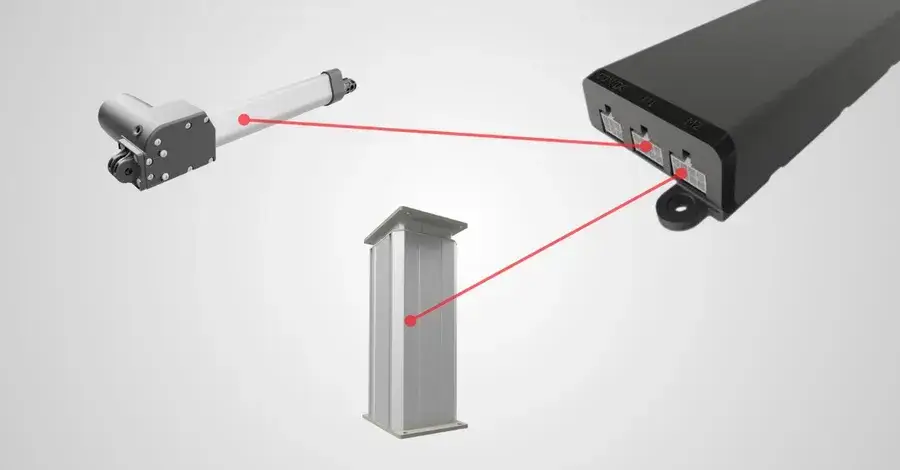
Synchronized Multi-Column Lifting Systems
When a single lifting column isn’t enough — when you need two, three, or four columns to travel together in perfect sync — Isotech’s encoder-equipped lifting columns make it possible. The optional integrated encoder provides real-time position feedback, allowing a control system to synchronize multiple columns to within millimeters of each other throughout the full stroke.
This capability is essential for medical imaging table platforms, large adjustable work surfaces, and any application where an unlevel lift would damage the load or compromise safety. Available across A, B, F, G, and X-series telescopic lifting columns.
Telescopic Lifting Columns — Frequently Asked Questions
What is a telescopic lifting column?
A telescopic lifting column is a motorized, self-contained vertical motion system made from precision-nested aluminum tubes that extend and retract to raise and lower a load. The telescoping design provides a very high stroke-to-retracted-length ratio — far more travel than a conventional rod drive of the same closed height. Isotech’s columns use a tight-tolerance, pad-guided assembly that eliminates play and delivers stable, maintenance-free operation.
What is a lifting column used for?
A lifting column is used wherever smooth, controlled, motorized vertical motion is needed in a compact package. Common applications include medical examination tables, X-ray and radiological equipment, height-adjustable office desks, industrial workbenches, barber chairs, collaborative robots, labeling stands, and camera stands. Multiple lifting columns can be synchronized to support larger platforms such as medical tables or wide work surfaces.
What is the difference between push and pull lifting column configurations?
In a push configuration, the motor extends the column under power — the column actively pushes the load upward. In a pull configuration, the motor retracts the column under power, drawing the load downward. The choice depends on your mounting orientation and whether gravity assists the return stroke. Isotech’s team can help select the right configuration for your application.
What are electric lifting columns used for in medical equipment?
Electric lifting columns are widely used in radiological and X-ray tables, CT and MRI patient platforms, imaging system positioning arms, and examination tables. These applications require smooth, quiet, precise vertical travel with no mechanical play — often synchronized across multiple columns to keep a platform level. Isotech’s tight-tolerance assembly and optional encoder feedback make their columns a standard choice for medical OEMs.
Can telescopic lifting columns be synchronized to run in parallel?
Yes. Isotech’s encoder-equipped lifting columns provide real-time position feedback that allows a controller to synchronize two or more columns throughout their full stroke. This is essential for level platforms — medical tables, large adjustable work surfaces, and industrial fixtures — where any difference in column height would stress the structure or compromise safety. Available across A, B, F, G, and X-series columns.
Are custom stroke lengths and load capacities available?
Yes. While the standard range covers strokes to 3,000 mm and loads to 12,000 N, custom configurations are available for applications that fall outside these parameters. Isotech’s engineering team can specify custom telescoping lifting columns — including modified stroke, load capacity, speed, number of sections, and mounting interface. Contact Isotech to discuss your requirements.
Not Sure Which Lifting Column Series Is Right for You?
Tell Isotech’s engineering team about your load, stroke, speed, and application — we’ll recommend the right telescopic lifting column series and configuration.